







 3 – 4.5 years
Early Learners
A gentle, playful introduction to numbers.
Total Brain Development Program
Abacus, Mental and Aural arithmetic: three components that strengthen both sides of the brain.

Batches matched to each stage of development.
3 – 4.5 yearsA gentle, playful introduction to numbers.
 4.5 – 6 years
Foundations for structured abacus learning.
 7 – 14 years
Abacus, Mental and Aural arithmetic combined.
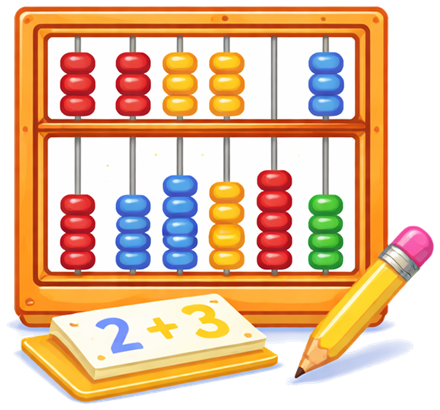
A strong foundation in number sense and structured thinking.
Children use CMA’s two-handed, four-finger technique to move beads and see exactly how numbers work. Using both hands keeps both sides of the brain active, and turns abstract maths into something children can touch.
Calculating through visualisation, with focus, speed and confidence.
Once the abacus feels familiar, children learn to “see” it in their imagination. Sums are solved on this mental abacus: quickly, accurately and without pen and paper.

Solving problems by listening, building memory and processing speed.
Numbers are read aloud and children calculate as they listen, holding each one in memory. It is wonderful training for attention in class and for following instructions.
Clear milestones that keep children motivated.
Children begin here and get familiar with the CMA way of learning.
Structured assessments move children through 13 grades of increasing complexity.
Students refine their skills across advanced levels and reach high speed and accuracy.
Not just in maths, but in focus and confidence too.


Share your child’s age and we’ll suggest the right program and a free demo class.